residency report
2026: Sunjoo Lee & Ko de Beer
Coming to Vlieland, Ko de Beer and I, Sunjoo Lee, were very excited to be back at the mudflats. I am deeply fascinated by the mud, the vitality and biodiversity that the wetland ecosystems host. We’re bringing to Standplaats Vlieland a project that we’ve been working on in the last few years. Back in 2023, in March, June, and September, I joined three field research trips by NIOZ to the middle of the Wadden Sea. These field trips triggered our project ‘The Land of the Knots’ which we are now working on within the residency. We came to Vlieland to gather a few more field recordings and to be inspired by the island and the mudflats to compose the materials into an art installation and a performance.

The intertidal flats are peculiar places. Time is organised by the ebb and flood of the tides, and the vast plane of mud meeting the shallow water forms surreal landscapes that blur the boundary between land, sea, and the sky. The wetland ecosystem is rich in biodiversity as it is a land of ecotone. Ecotones are transition zones where two or more different ecological communities and biotic regions intertwine. These traits combined, the magic of the tidal flats is incomparable to other kinds of landscapes. The Wadden Sea is a fragile landscape threatened by climate crises, land reclamation, and human infrastructure in and around the region that directly influence the ecosystem.
The red knots are a species of wading birds that come to the Wadden Sea during their long journey to Siberia and West Africa. They come here among many other species of shorebirds. Many of the shorebirds dwelling at the Wadden Sea are migratory. The Wadden Sea is a very important stopover location for them to rest and recharge. A compromise in the ecosystem's health at stopover sites can significantly impact the survival of the birds. To understand the lives of the birds and their interactions with the environment, the scientists at NIOZ study the red knots’ movements by tracking them. The tracking technology they developed is called WATLAS. Their movements are tracked in high resolution throughout the Dutch Wadden Sea, using around 10 to 20 receiver towers installed at the shores or in the middle of the mudflats. The scientists go every month into the mudflats to tag the birds with the trackers. The little tracker devices that the birds carry on their backs send signals to the towers nearby, and they locate the birds. Allert Bijleveld is a principal researcher at NIOZ who is deeply involved in the red knots research, and is the person who has generously responded to my interest in joining the field research. He took me into the field, to the middle of the vast mudflats, where the researchers catch, tag, measure, sample various birds, especially the red knots, and build solar and wind powered receiver towers. This movement data of the red knots are used in our project as a main medium of generating and controlling the digital artwork. The data is a long list of latitudes and longitudes of individual bird’s movements, of about 200 birds in total per year. They move in flocks and follow the movement of the tides, forming a steady rhythm. It is incredible to watch the synchronisation of the birds, tides, and the landscape. All these sets of data can be re-played within the computer. Wildlife is captured into a stream of numbers, therefore the wild animals’ movements are reborn within a digital simulation.
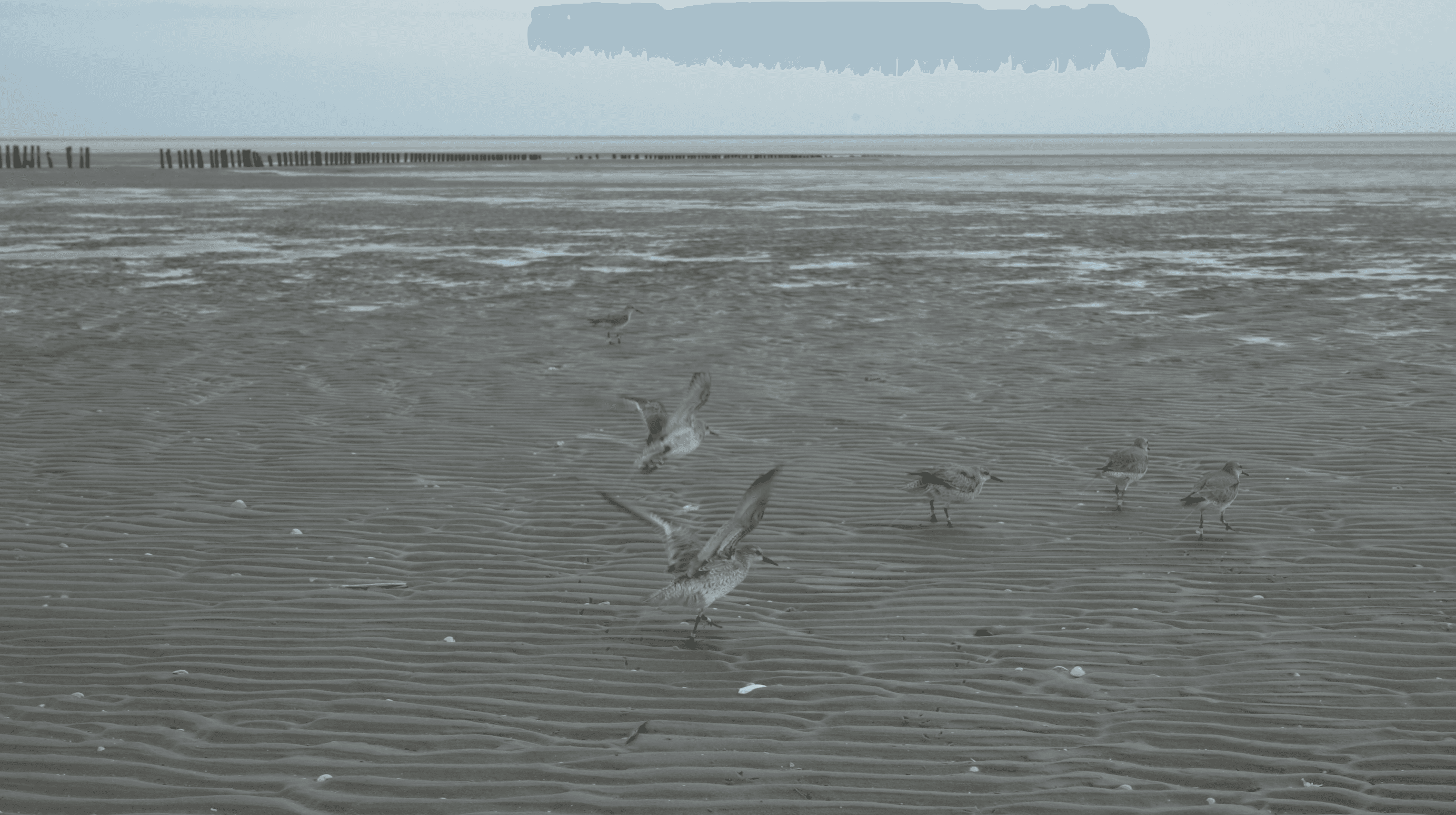
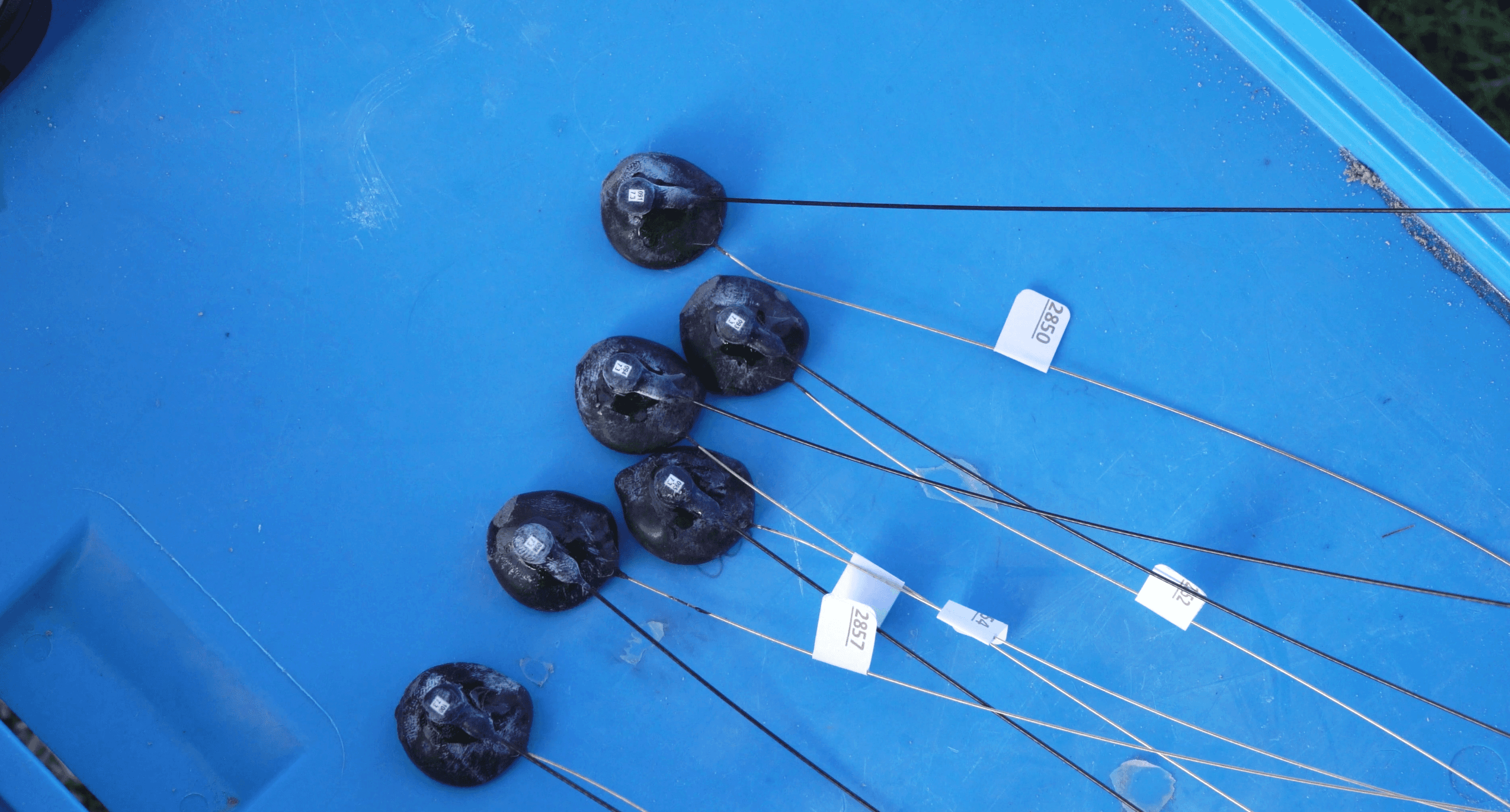
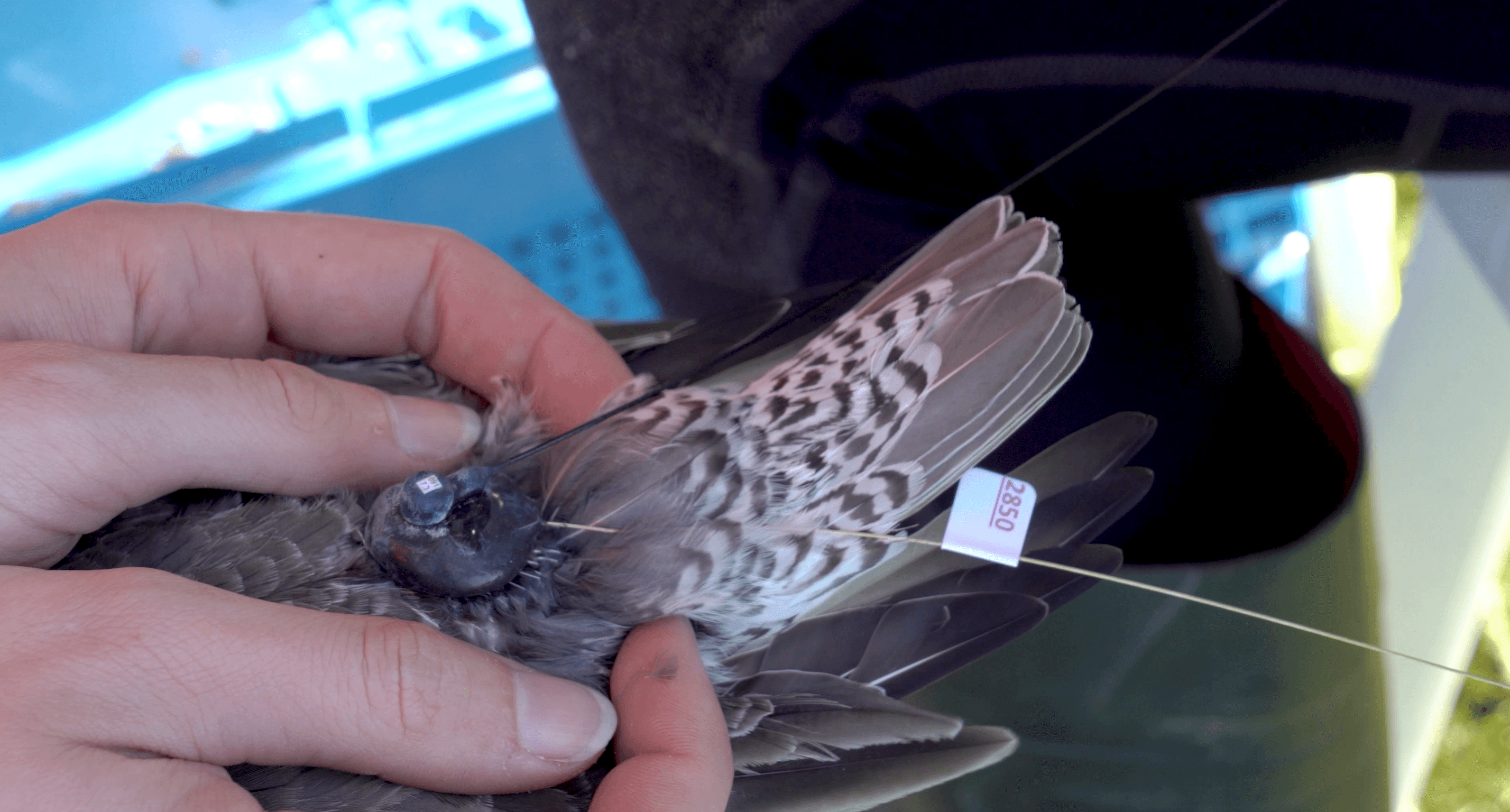
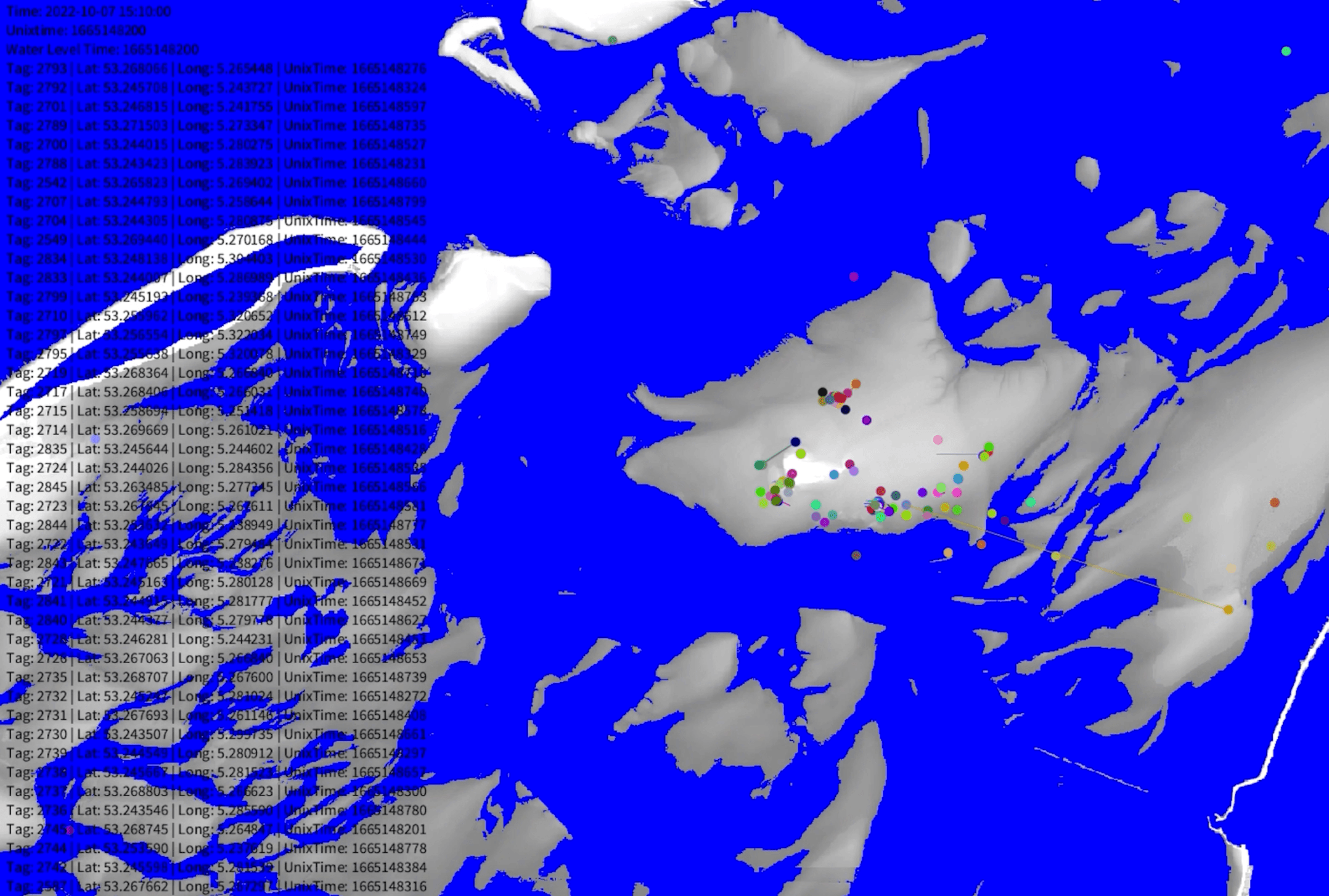
I am fascinated by the data and their origin. This is an important topic of the project - how data, technology, field research, and human-wildlife interaction are entangled, and how they shape and reflect the relationship between humans and animals. The technologies that enable a highly detailed observation and analysis of nature is available to us. The more we are mediated by machines in approaching nature, our relationship to nature is shaped in particular ways.
Western science has gained authority over the way we physically and philosophically engage with nature. However, the reality of wilderness is not comparable to what happens in a laboratory. The clean equations of causes and effects are not easily drawn up from the unruly landscape such as the Wadden Sea. Once a researcher during one of the field research trips told me that it often feels too challenging, or almost impossible, to capture the immensely complex ecosystem in clean calculations. Another researcher at the University of Amsterdam said to me that data in numbers come alive once they are visualised into images. Stories embedded in the datasets can be intriguing, yet when in the form of a list of numbers they are illegible to humans. Ironically there is a power that the numbers hold, especially in the technocratic society we’re living in. The fate of the wading birds in the rising sea level from global warming is demanded to be proven using data. The ecosystemical destruction by humans has to be measured in numbers, otherwise it is regarded as a rumor. Statistics is regarded as a powerful language that can carry legitimacy to persuade policymakers. If only simply stating ‘biodiversity is fundamental to Earthly life therefore we need to protect it’ could go far into policies that can protect the birds.
The physical place where the data comes from, holds completely different story from the dryness of numbers. It is full of compelling tales, emotions, and overwhelming sensorial experience. The scientists interact with wild animals intensely and in proximity, something that I as a city dweller of the Netherlands do not get to experience. From what I’ve witnessed, the field trip for gathering this data - the catching and tagging of birds, building up receiver towers, and all other field activities related to the research - are done through demanding physical labour. The Wadden Sea is not a hospitable place for humans. The fieldwork at the mudflats is heavy, wet, sweaty, cold, challenging and exhausting but it is joyful. The colors of the sky and the ocean, the infinite vastness mudflats and the wonder of being in the midst of flocks of thousands of birds gives a feeling of awe. I started to attach emotionally to the surroundings. The Wadden Sea and its complex ecosystem cannot be captured by data. Scientists produce data and draw up analytics, simultaneously they are the ones who experience the beauty of nature firsthand, at its deepest places.
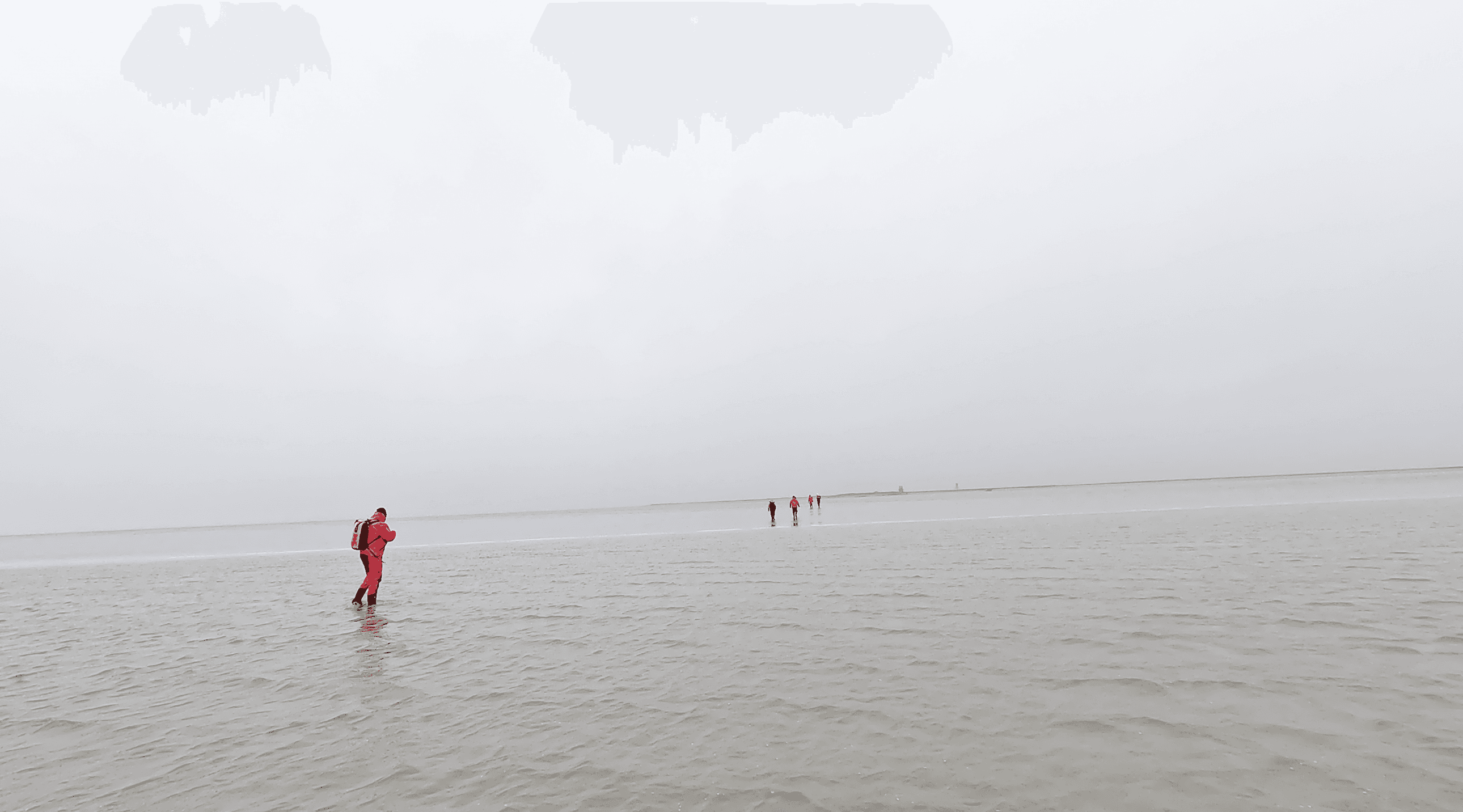

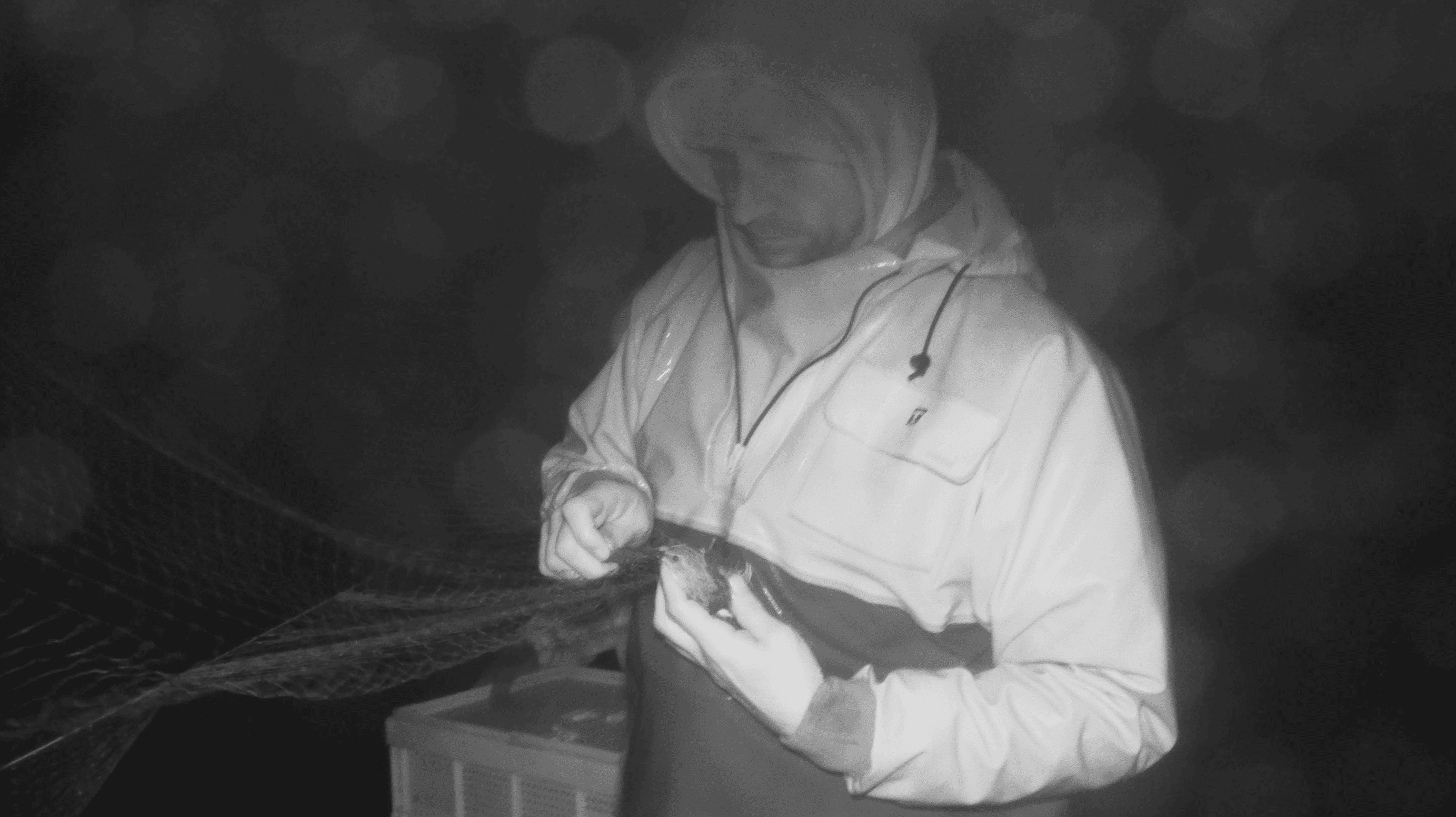
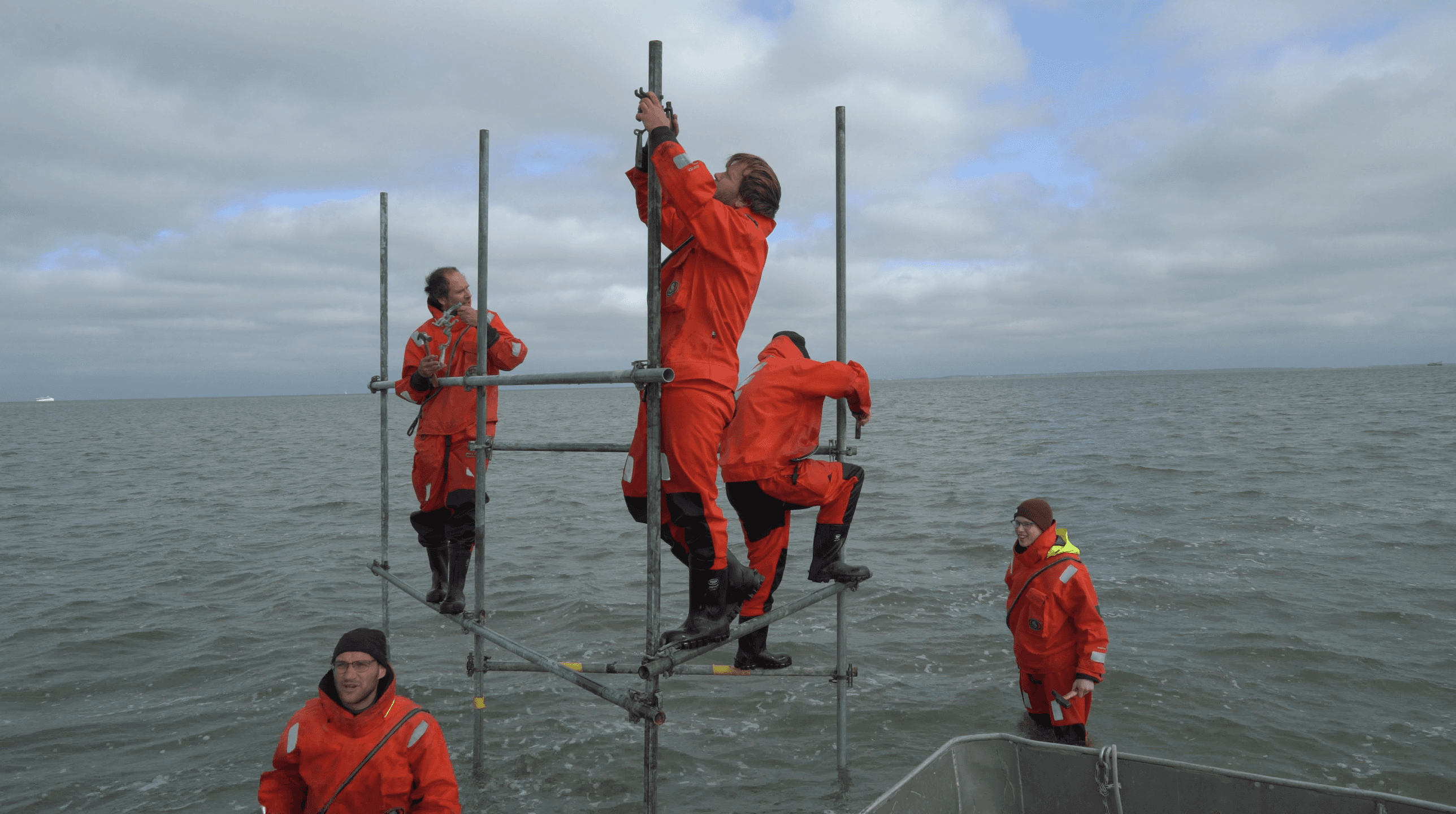
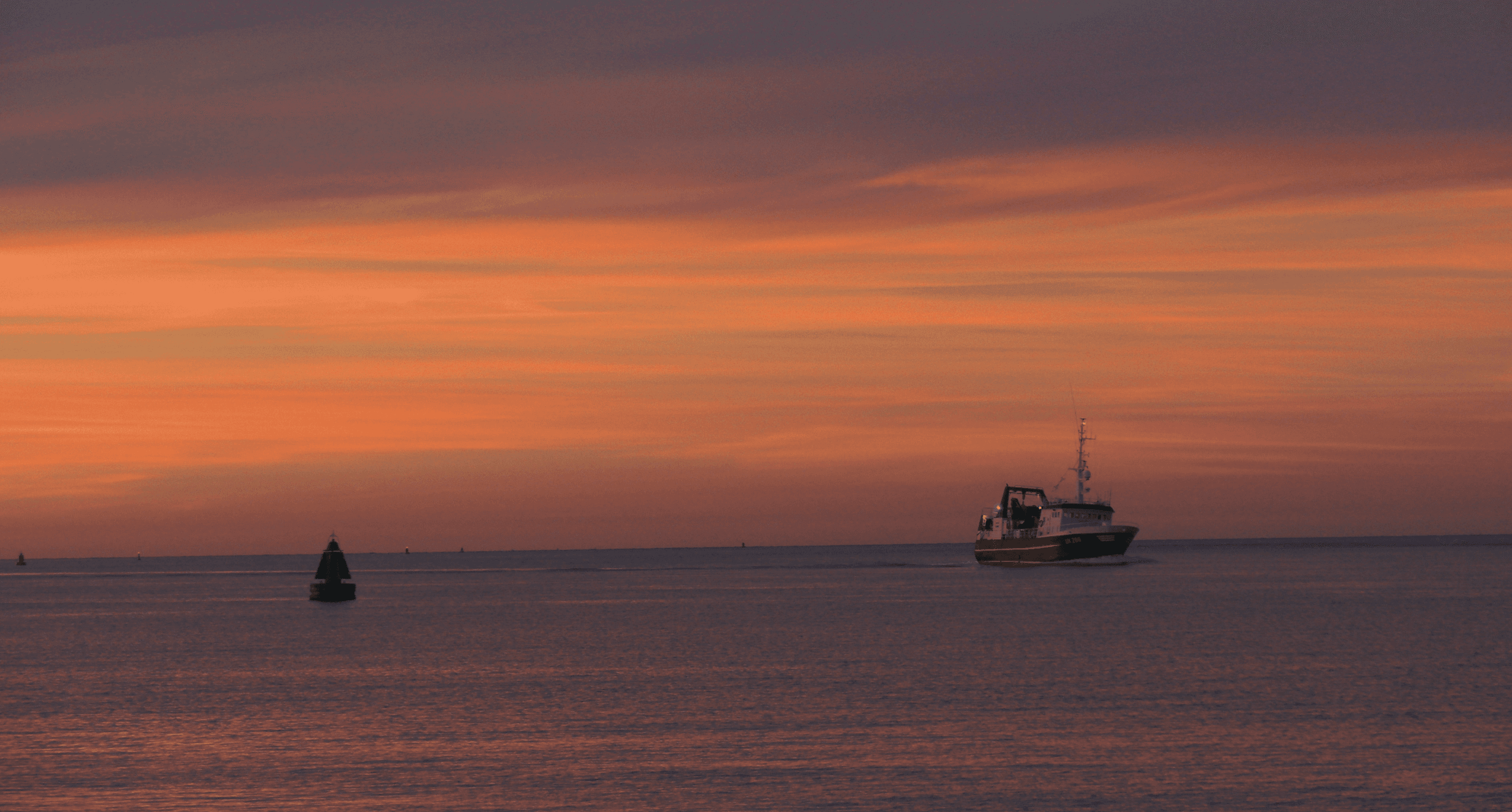
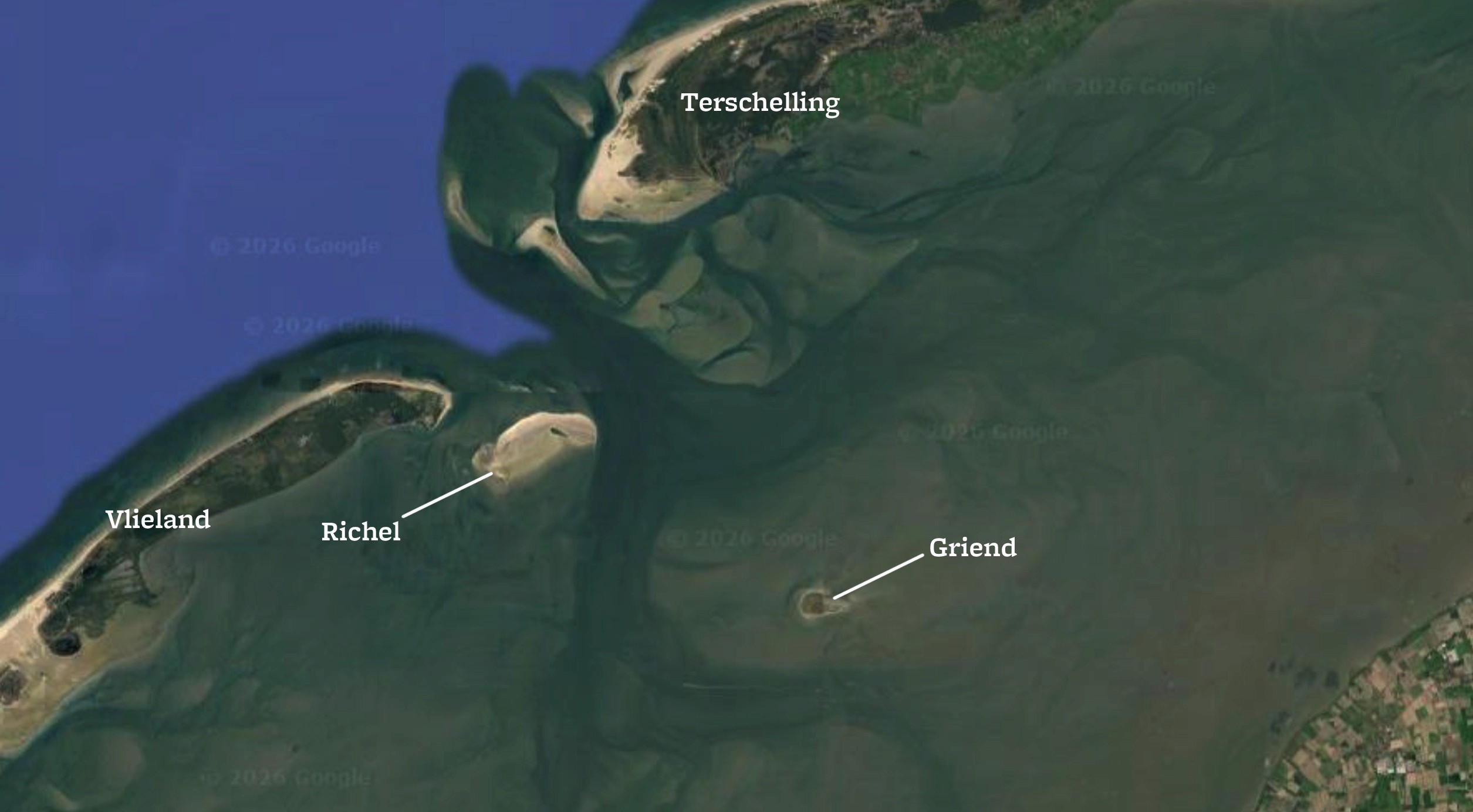
Vlieland sits adjacent to Richel and Griend. These are two small islands that the red knots love to dwell in. Griend is an island especially popular for the birds, therefore it is a primary site of research for scientists at NIOZ. Many shorebirds including the red knots also visit Vlieland, and one of the receiver towers is standing on Vlieland actively locating the birds flying nearby.
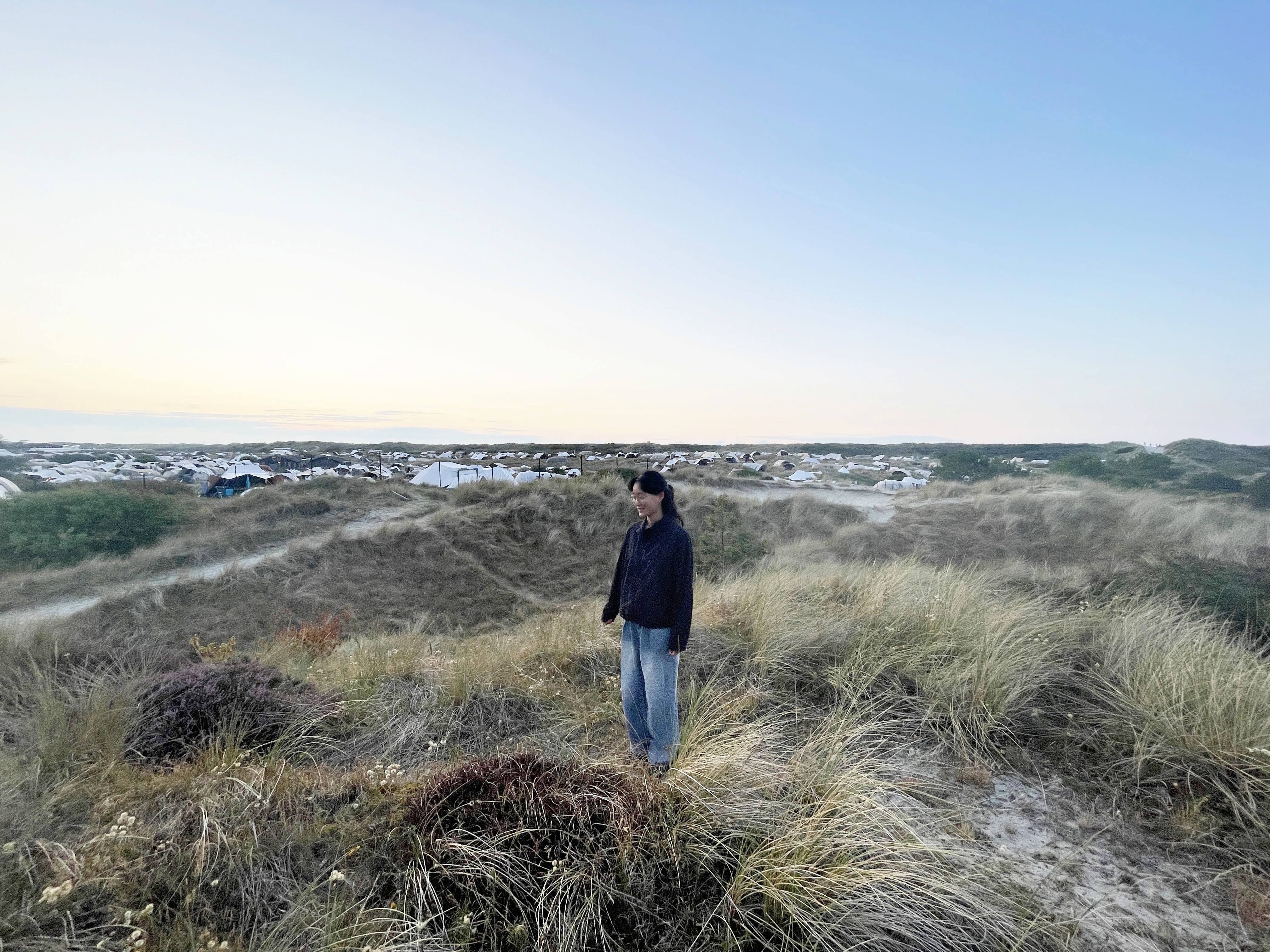
At our residency in Vlieland, we started to settle down, do some camping at Stortemelk for the first week. That was a very good way to stay outdoors. We saw the vibrant night sky filled with stars, and heard many birds pass by. Our goal in the residency was to be surrounded by the ecosystem of Vlieland and the birds, gather more field recordings at the shores, and finally come up with the composition of the artwork, using all the materials that we’ve made and gathered in the last three years. I had taken a lot of footage from field research trips with NIOZ. Before coming here, I had been unsure about how I to compose these seemingly contrasting visuals into one artwork. How can I tell the story of both worlds of data and reality, mixing the contrast of numbers and meaning, knowing through data and knowing through experience. At Vlieland we met people who engage with the Wadden Sea in personal and experiential ways once more, and through that it became more apparent that I should combine the footage of field trips in the artwork rather than having it as a side-documentary. Communicating the experience of wildlife of the Wadden Sea through only data-generated visuals were not enough, as it only tells one side of the story.
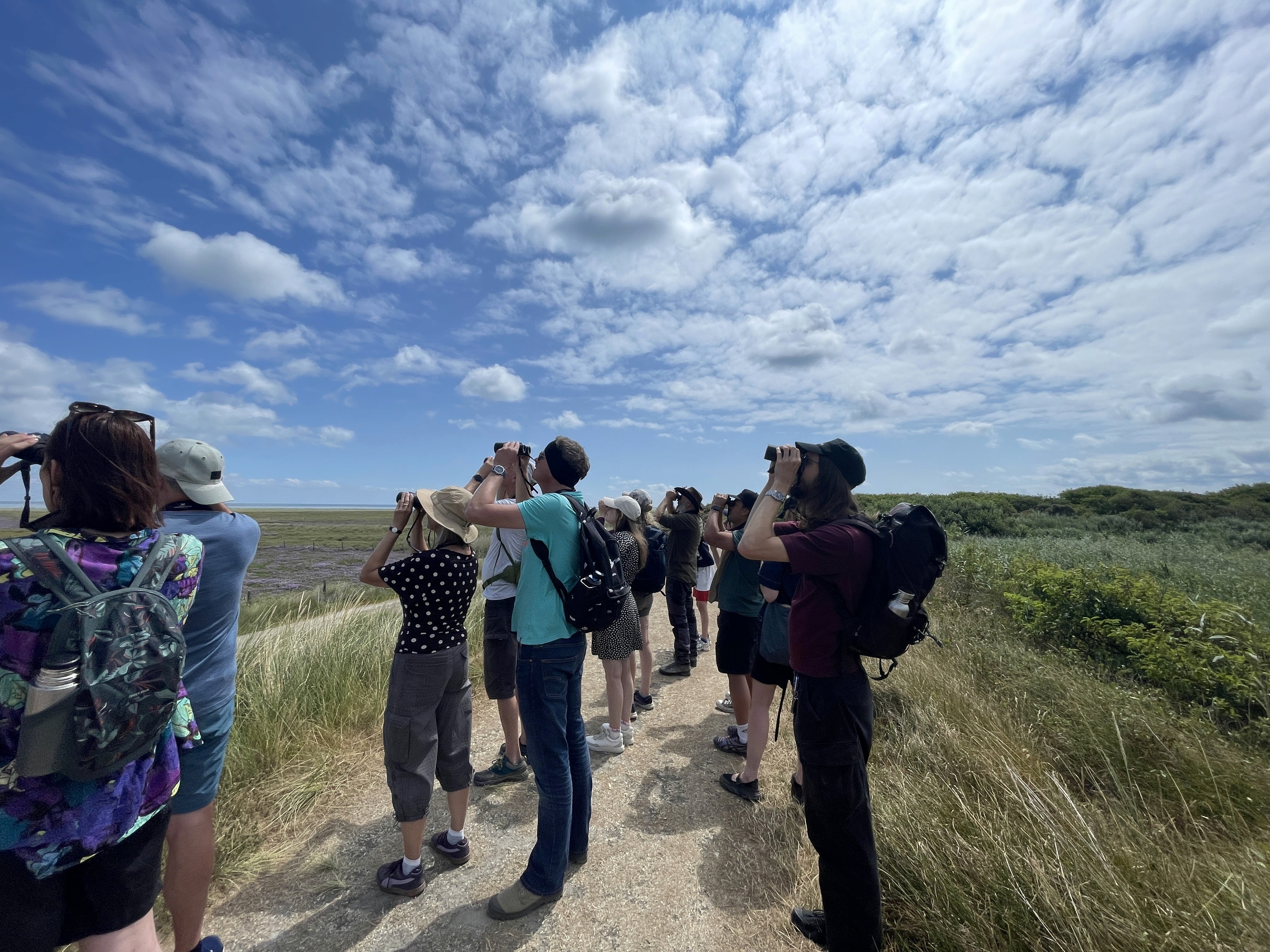
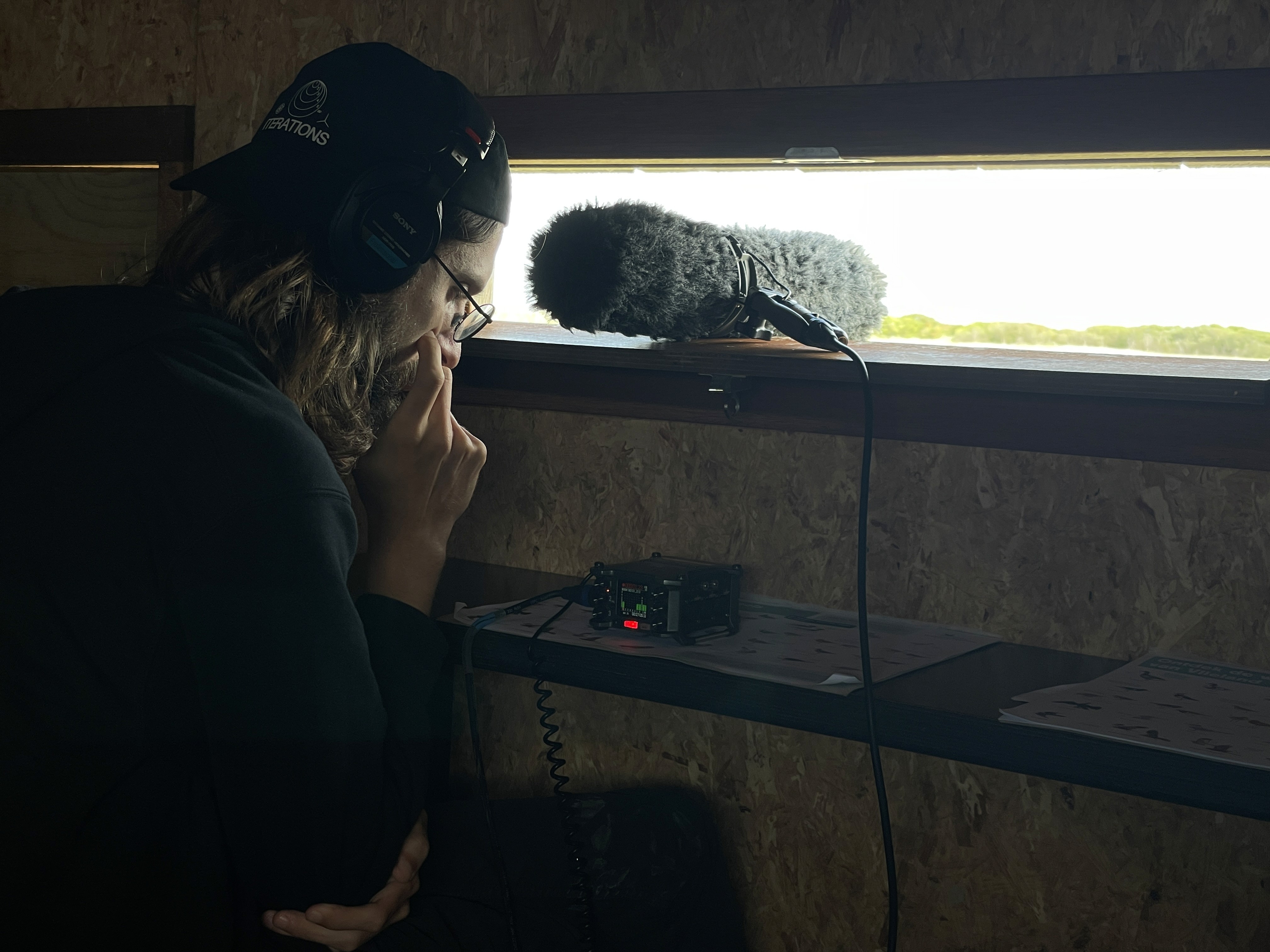
At Vlieland we joined guided tours to the western side of the island. One of them was a birdwatching trip, with Folkert as our guide. He has lived in Vlieland for many years and could tell us stories about the birds living in this area.
The Kroon’s Polder is a great place to watch birds in Vlieland. There is a birdwatching hut in the middle of the polder where we could walk into without bothering the birds too much. It was great to see the polder populated by many different shorebirds. The bird expedition is scheduled at the high tide, that is when the birds are closer to us rather than feeding at the faraway mudflats. The wading birds usually feed at the shallow edges where the water and the land meet. What impresses me every time when I am guided by a birdwatcher, or an ecologist, is their affinity towards these creatures. I find their mode of knowing that is accumulated through time and experience, and their personal connection to this landscape admirable. In a country where the connection to nature has been severed, highly mediated, and artificially constructed, regaining close ties with nature is a challenge and methods for it are subject to question. Many of us living in cities of the Netherlands do not know the seasonal changes through various birdsongs but rather by weather prediction apps. The locals of the islands and shippers know how to distinguish the birds by their looks, the way they fly, their songs and cries, and the time of the year they visit the Wadden Sea. Folkert told us that the red knots are now slowly coming back from their breeding grounds, and there will certainly be hundreds of them here at Vlieland in the winter. I could spot a few red knots in between the other birds. What makes us rejoice at birds coming back to us every year? Do we miss them when they’re away, are we waiting for them, and wishing their journeys to be safe?
Humans have been fascinated by birds for long throughout history. A useful overview of the human-bird entanglements are told in the book Feathered Entanglements by Scott E. Simon · Frédéric Laugrand. For example the term ‘auspice’ meaning omen watching, originates from Greeks predicting the future through watching the birds’ behaviors. Birds have inspired many dances, clothes, and songs of human cultures around the world, such as the dances in Papua New Guinea and the ancient cave paintings. Birds have taken important characters in folklores, myths, and rituals, carrying symbolic meanings such as freedom, independence, heavens, messengers, deaths, and many more. Levi Strauss demonstrates that Western societies conceive of the world of the birds as parallel to that of humans, which is apparent in the naming of the birds - people have often given human names to them such as Maggie pie (Magpie) and Robin in 15th century England, as if they lead a society parallel to humans. In this book, the author connects the failure of humanity causing climate crisis to the failure to communicate with the birds. What if we could hold conversation with the birds, understand their ways of knowing the earth, where they go, what they do, and why they’re here? Would we be better off then ecologically, as the birds are connectors of the earth and the heavens, and many other faraway places?
Technology that track the birds’ movements sit at a complex edge of these meanings and consequences. By tracking we got to know where each bird goes, which tree it always comes back to, which countries it passes by, what they eat, where they die, where they are born. They fly in flocks and alone depending on the species, and many of them do not learn where to go but they know by heart. Scientists hypothesize that the geological locations where migrating birds head to are ingrained in their DNA. These contemporary tools gave us the predictions of the climate changes and facts that prove entanglement between the creatures and their environment, but still we struggle in preserving their habitats. It has been proven that the birds are going to their summer breeding grounds in Siberia rather than delivering messages from the heavens, however we stopped thinking of birds as precious and sacred. Why has science and enchantment not developed hand in hand, but a success of one corresponds to the other being diminished? How can scientists and the contemporary humans living next to the Wadden Sea, bridge this gap between knowing through science and knowing through entanglements - through meaning, love, wonder, and memory? We experience both ways of knowing, while they are still in conflict with each other.
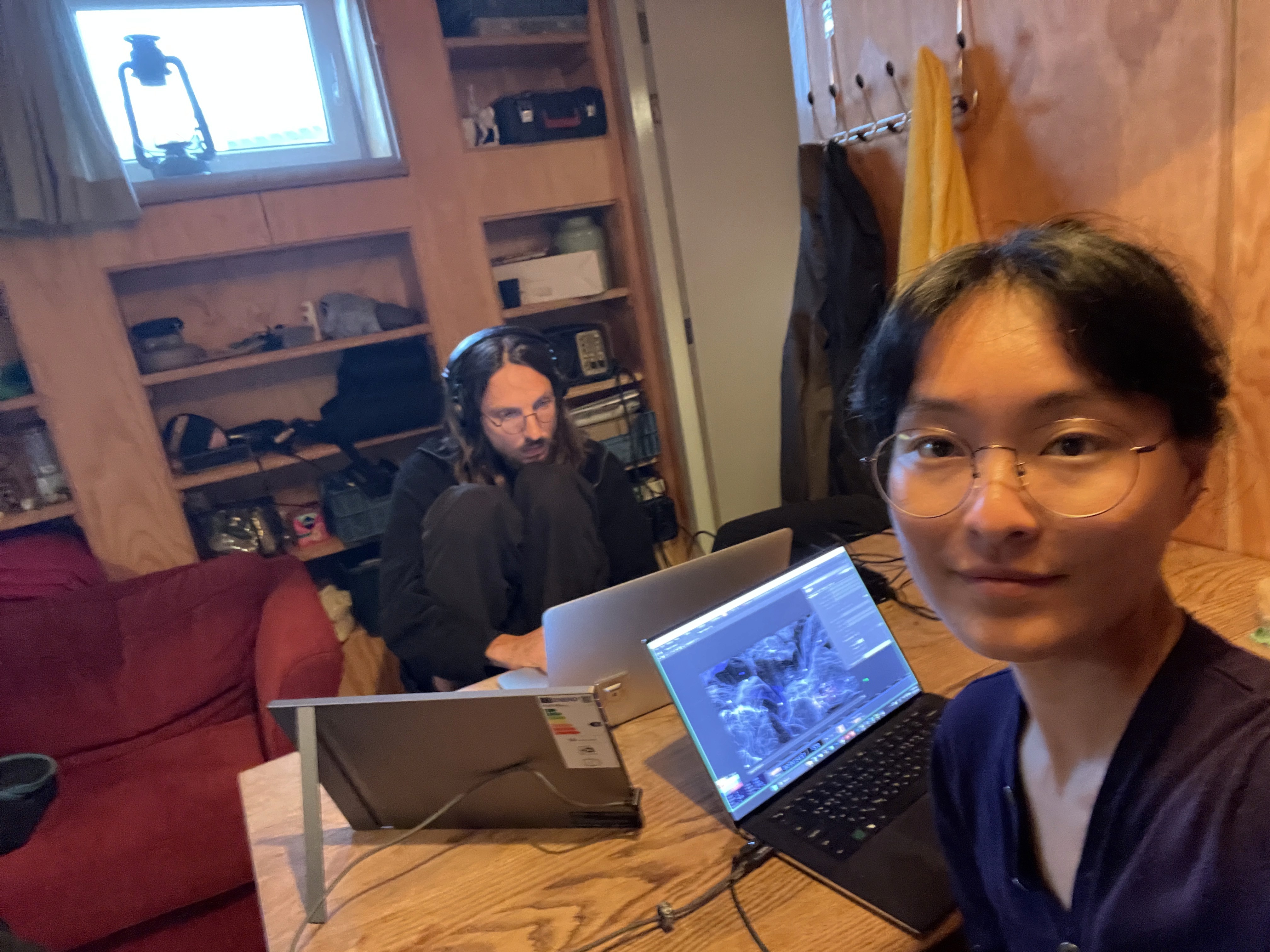
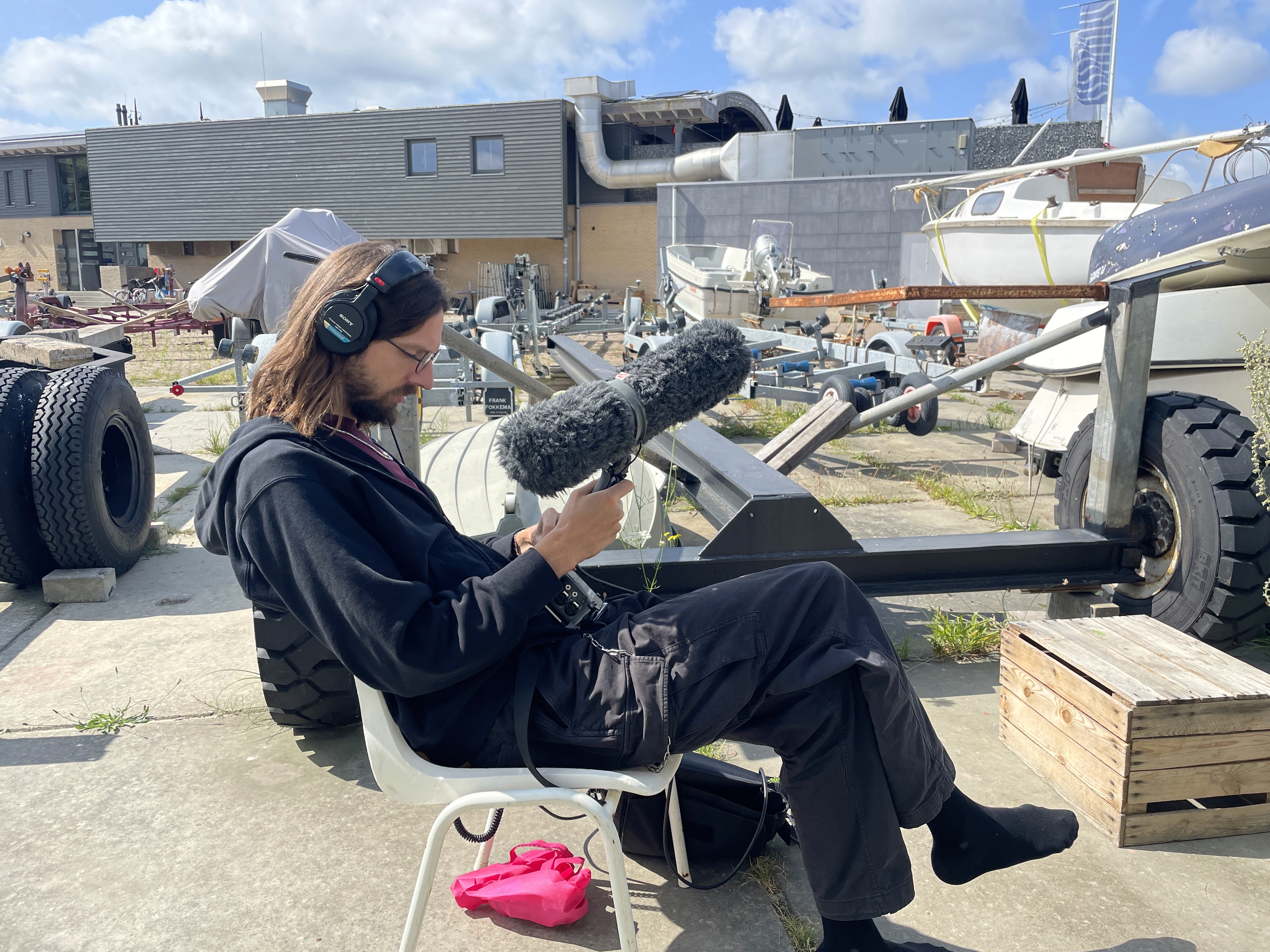
We started to refine the visuals generated from the data of the birds, and juxtaposed these with the documentation footage that I took from the field trips. Also I started to work further on the sequence of the documentation, making a longer film that has an abstract narrative. Ko mainly worked on the sound, which is generated by the birds’ movements on the map. The 3d landscape of the Wadden Sea was provided by Allert from NIOZ shows a high-resolution shape of the sea bottom. The trenches and shallow mudflats shape the dynamic landscape under the water.
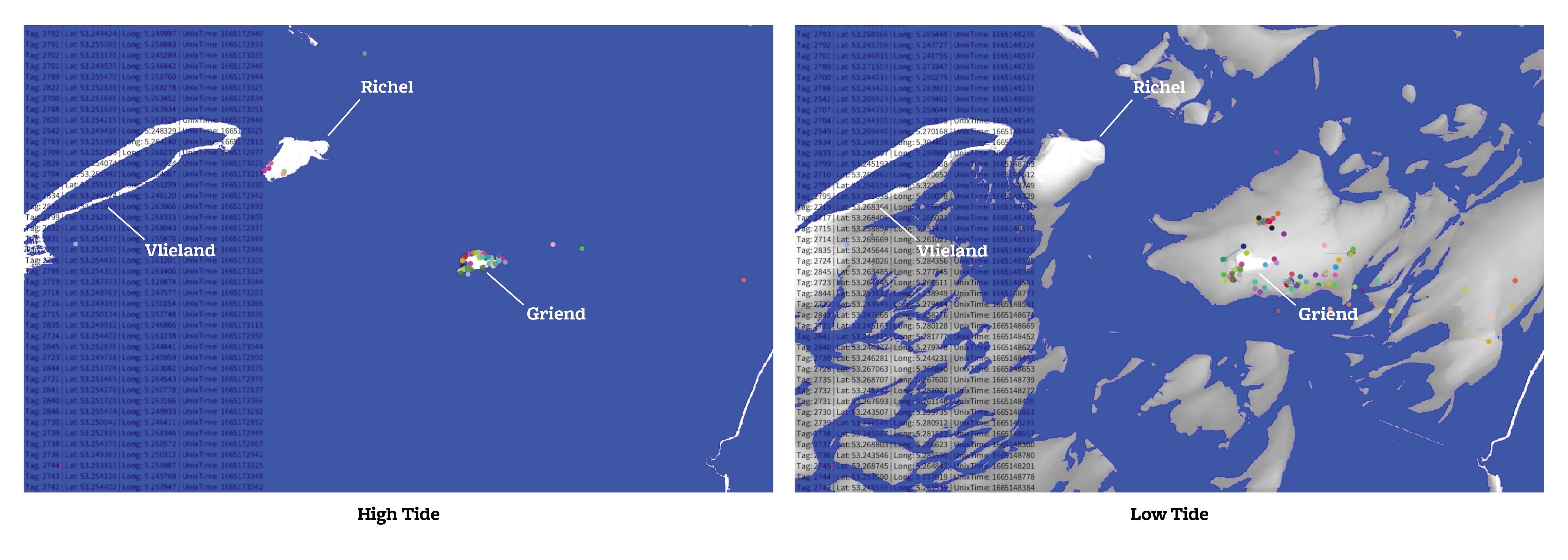
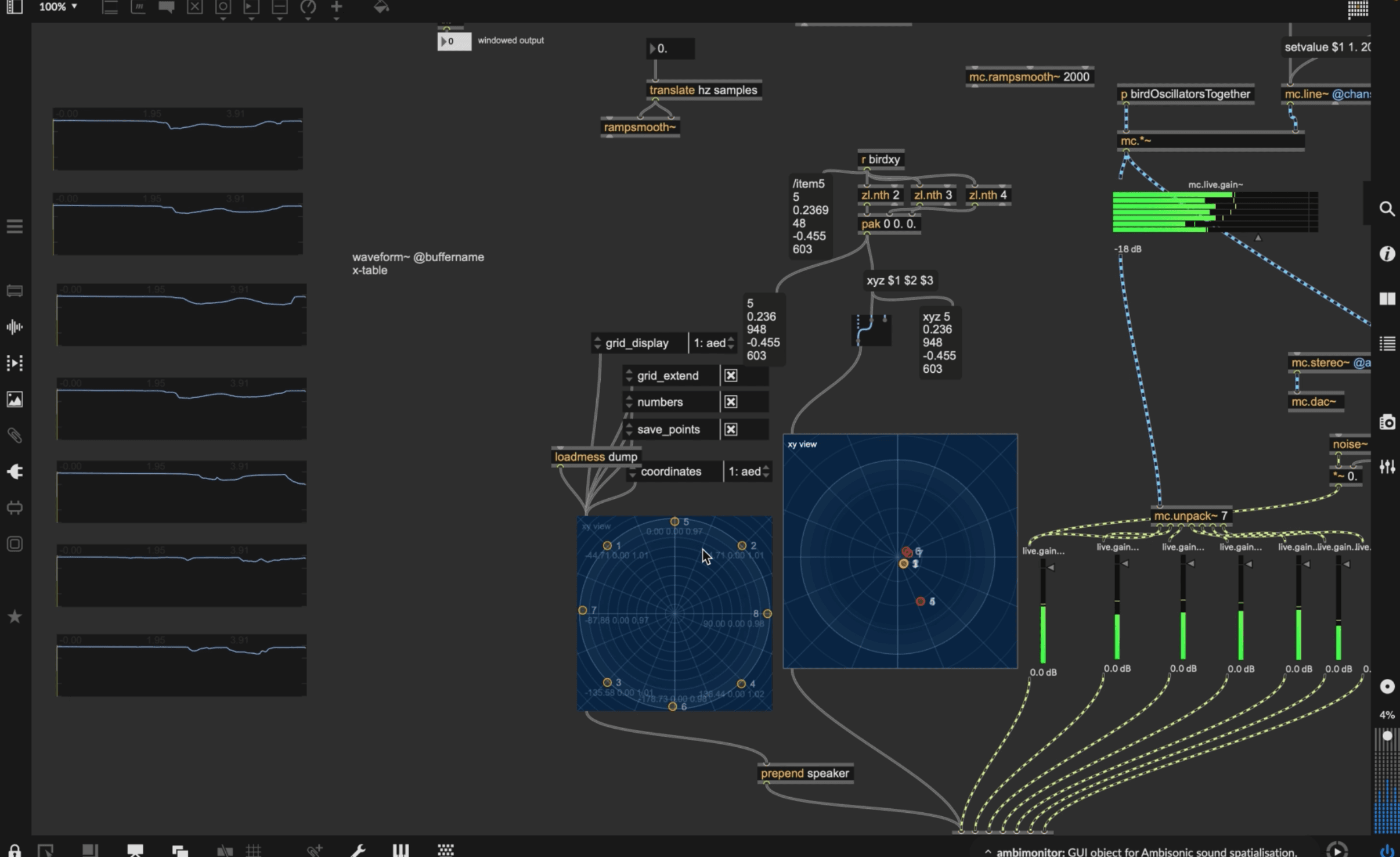
The tides coming in and out of the sea makes the land exposure change. The high tide covers almost everything and only leaves the islands above water, and low tide uncovers a great deal of the shallow mud, extending the land to the faraway mudflats. In Ko’s sound-generating program, the birds are scanning a cross-section of this landscape which becomes a waveform for sound. The waveform changes as the birds move through the landscape. Every bird generates one voice. This soundscape changes dynamically with multiple birds moving simultaneously. The sound recordings from the Wadden Sea play, fade in and out depending on the tidal movement, mixing in with the waveforms generated by the birds. Ko tested this 3d soundscape with a four-channel sound system that he brought to the residency. The soundscape takes on a feel of drone, ships, organ, or high-pitched string sounds, depending on Ko’s artistic choice of the scales. They are unpredictable and at the same time has a certain harmony, and changes with the tidal rhythms as the birds move with the tides.
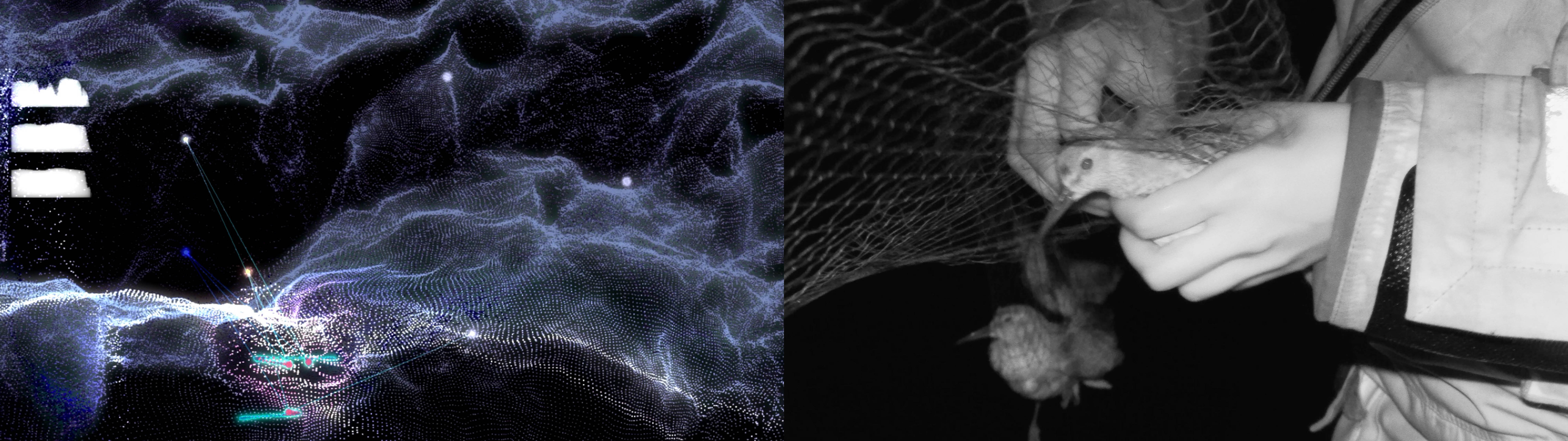

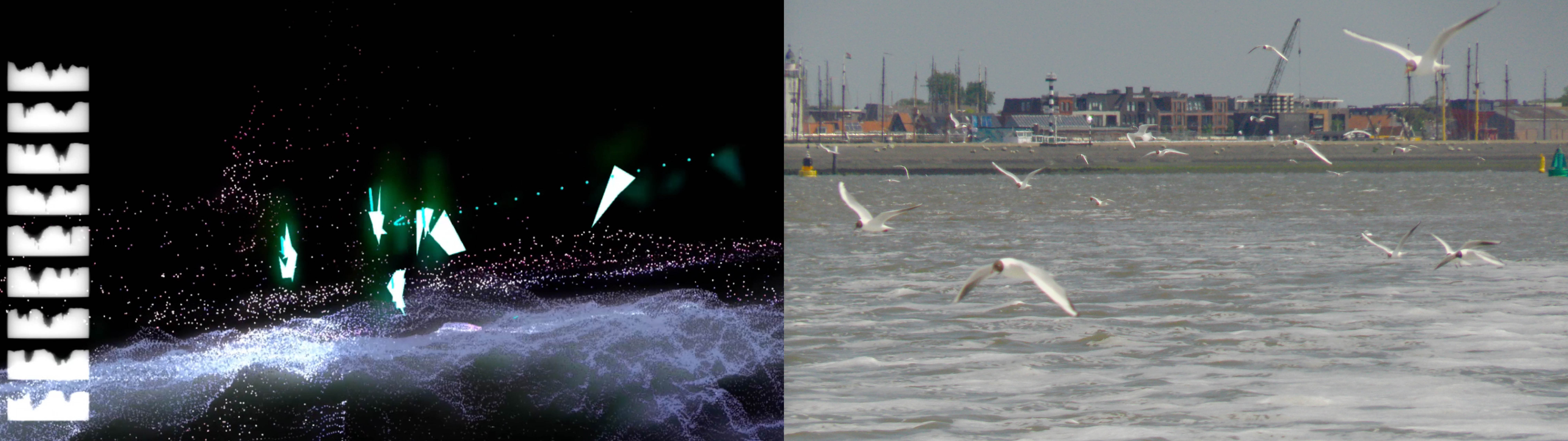
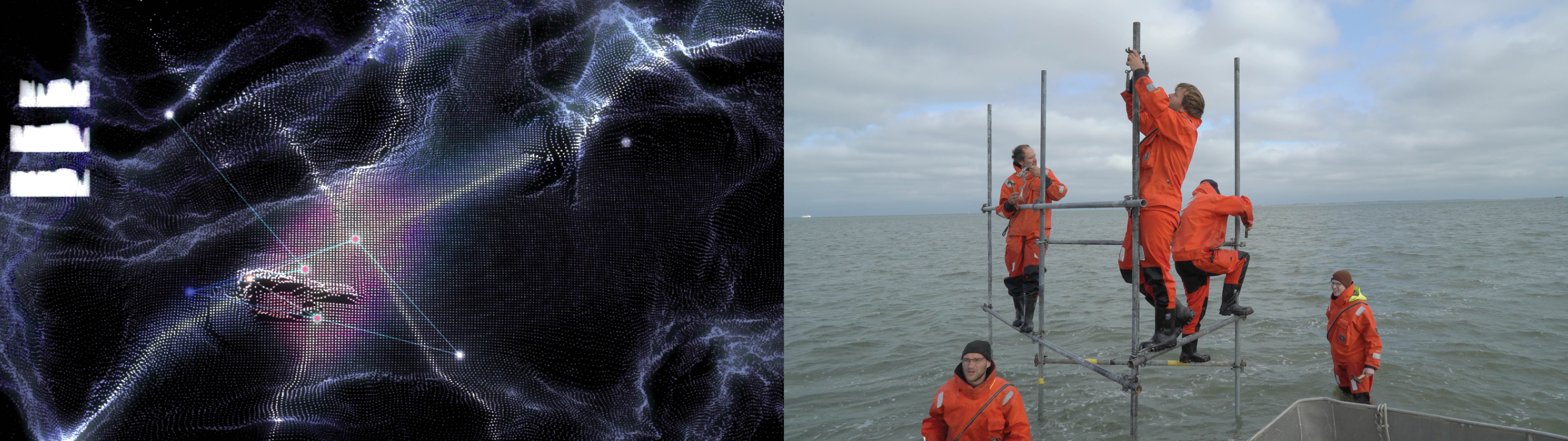
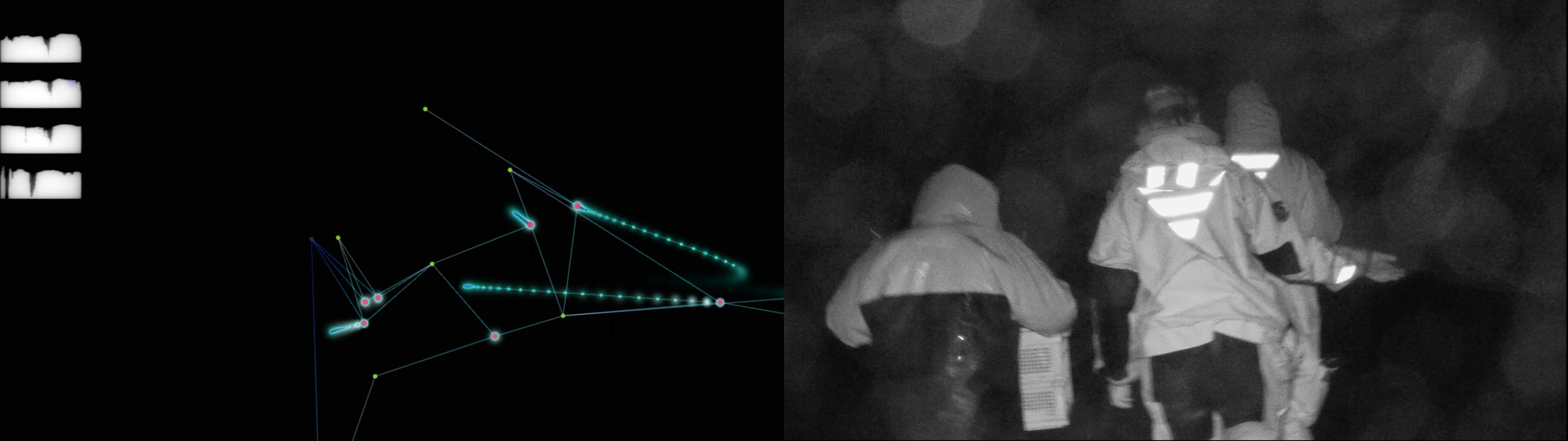
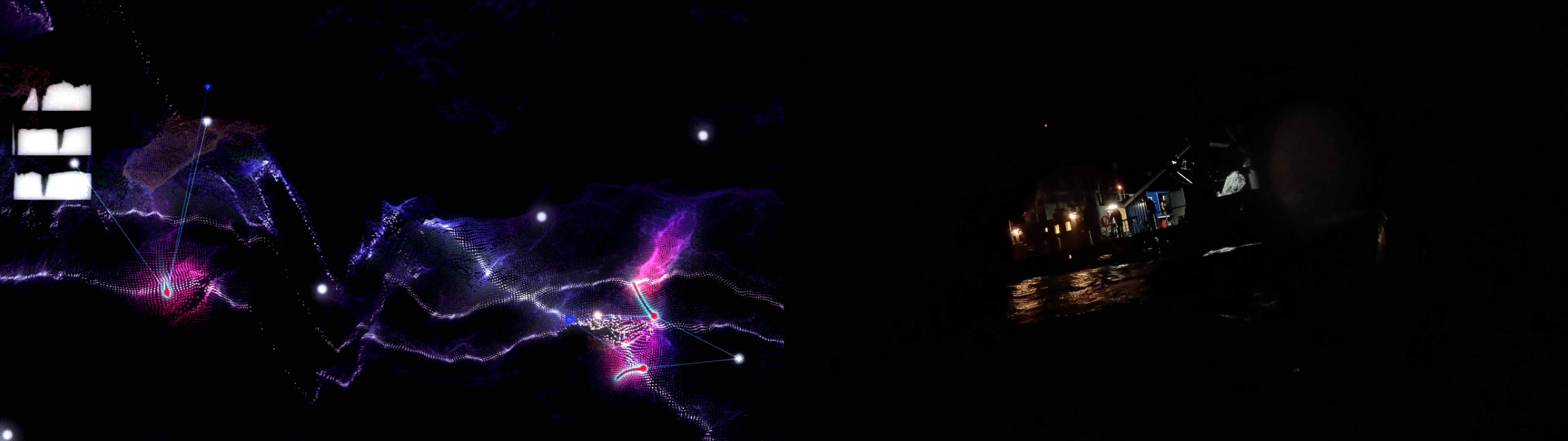
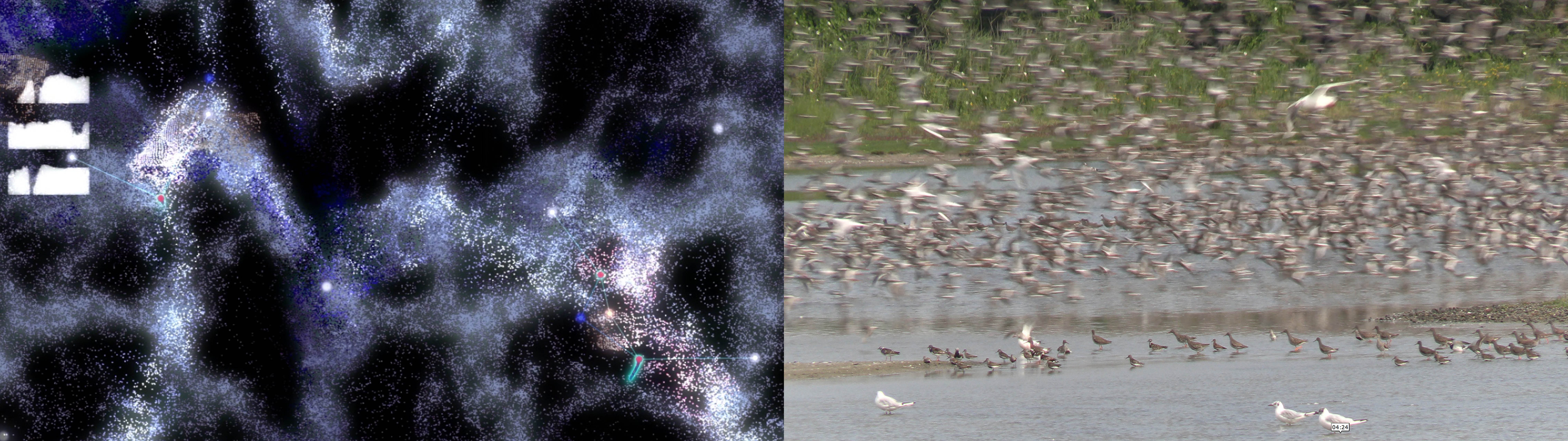

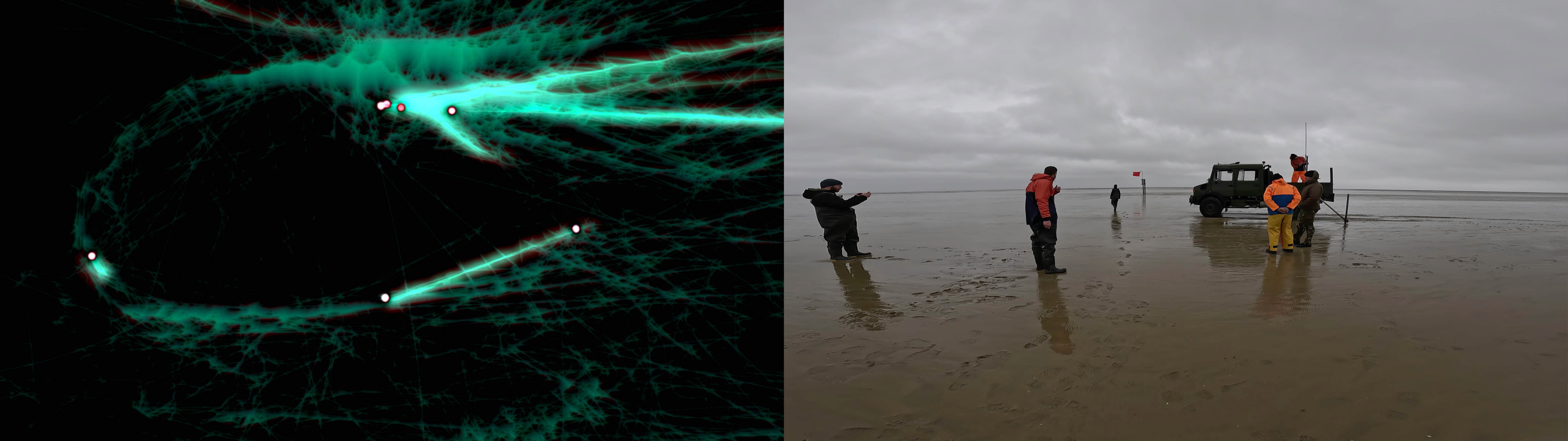
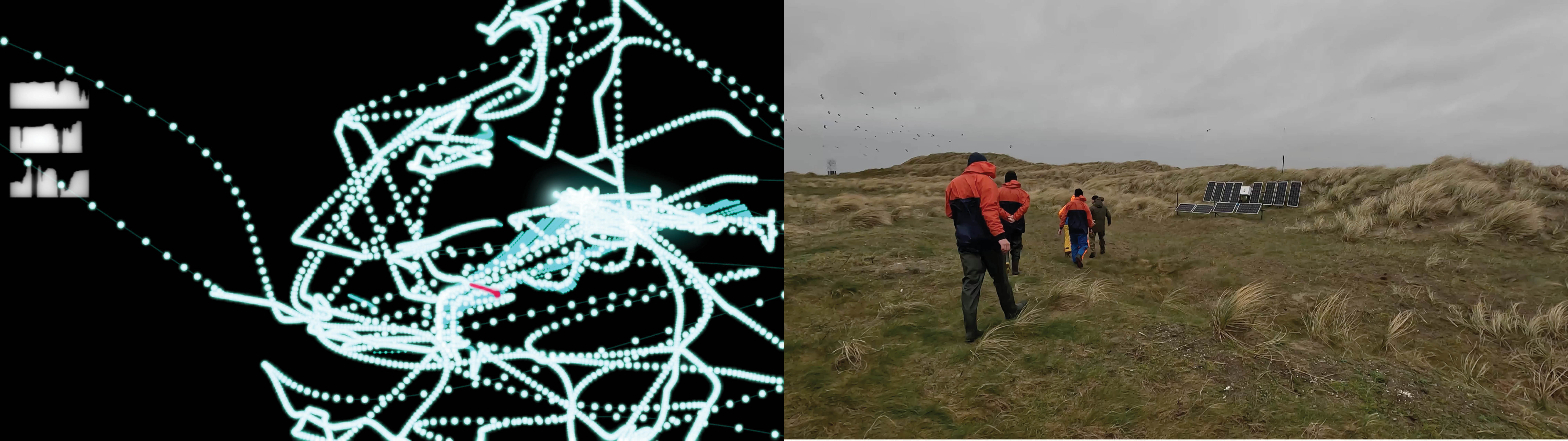
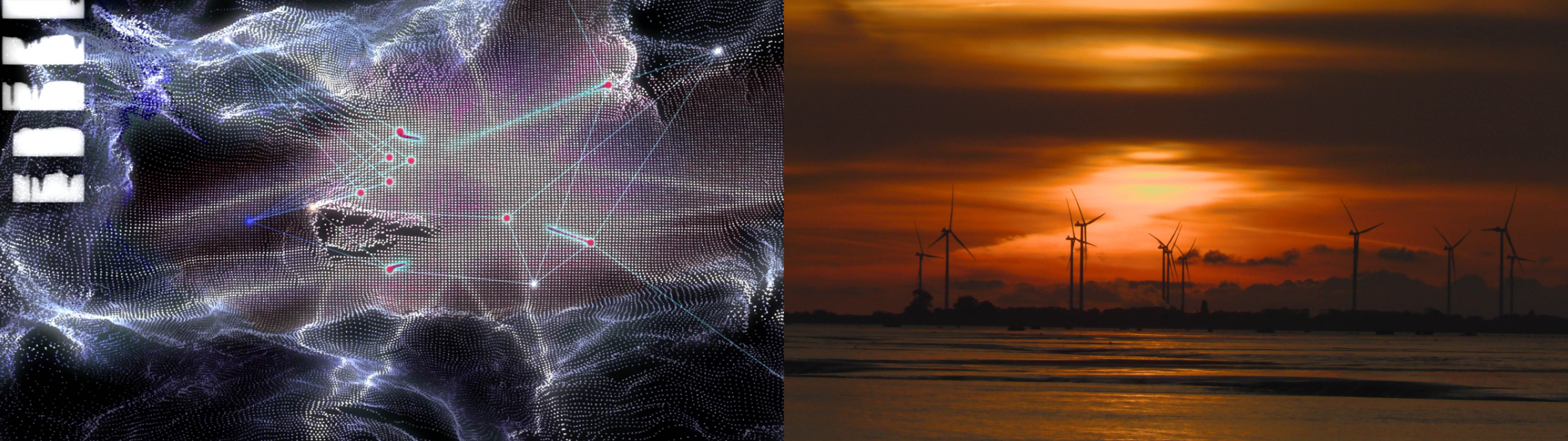
The data-generated sound and visuals playing next to the footage gives an interesting mix of connection and contrast. Some scenes of the footage connect well to certain colors and patterns of the data visualization. The footage of the researchers on mudflats look like they’re exploring a different planet. The visuals I’ve made of the data is intended to feel like science-fiction in its aesthetics. The combination of these two channels of video take on a fiction-like feel with a bit of drama. The duration is stretched out, giving the long-takes of the documentary footage enough time to immerse the viewer into the vast scale of the mudflats, the long walks and the continuous labour of field research. The data gains back the complexity it had lost, through an artistic translation. And through the editing and juxtaposition, the documentary gains a perspective of reality, with a touch of fiction. Art, when it is combined with science, could take a role of re-enchanting the viewer, uncovering the mystery of life by telling a compelling story, or by making certain entanglements visible that are true but not so obvious.
The last day of the 3-weeks residency period in July, we visited the Kroon’s polders again. There were even more birds than last time. I started to recognise more and more birds by heart, as I studied their names and looks. It was still very difficult to distinguish birds by their songs. I’d have to train my ears for that. One species of bird can sing different songs depending on the seasons, activity and if they’re male or female.
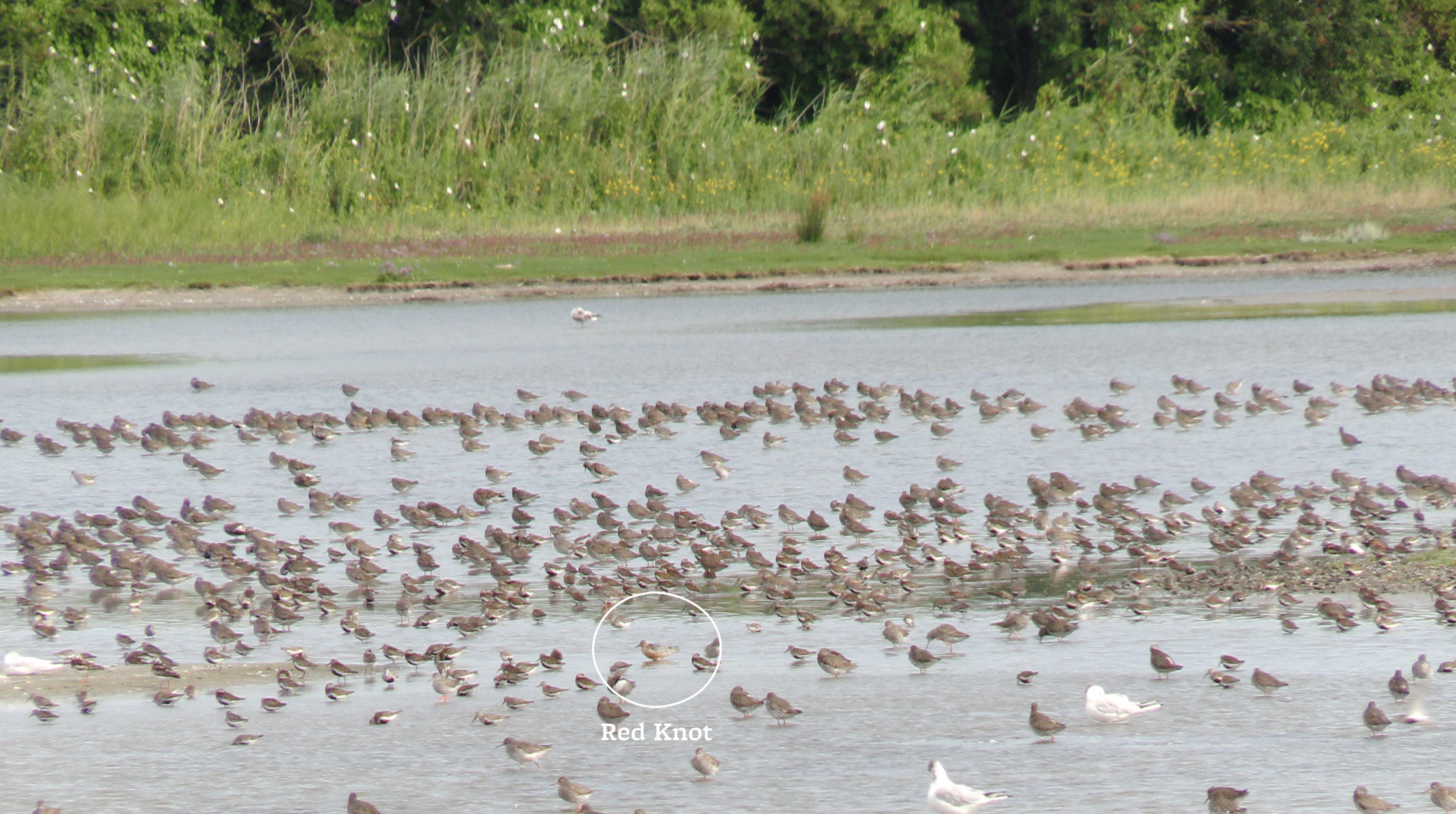
I recognized the red knot among many other species of birds. Red knots are easily recognizable during summer when they’re just arriving in the Netherlands, because of their summer plumage - the iconic terracotta-red chest. In the winter they will lose these red feathers. Folkert was right, they’re slowly coming back. There will be hundreds of them here when we come back in October and December. We’re looking forward to when we can see them in big flocks, flourishing and thriving at the wetlands of the Wadden Sea.
Over Sunjoo Lee & Ko de Beer
Op het snijvlak van technologie en ecologie onderzoeken interdisciplinaire kunstenaars Sunjoo Lee en Ko de Beer de ecologische realiteit van de kanoet. Met hun werk slaan ze een brug tussen de biosfeer en technosfeer, waarbij digitale tools worden ingezet voor een 'meer-dan-menselijke' filosofie.
In hun audiovisuele installatie en performance fungeert de kanoet als graadmeter voor klimaatverandering in de Waddenzee. Het project vertaalt de trekpatronen en ecologische relaties van de kanoet door middel van artistieke interpretaties van wetenschappelijke gegevens en bewerkte filmbeelden, waardoor een meeslepende audiovisuele ervaring ontstaat.